

Choosing an ecommerce platform is one of the biggest decisions you’ll make when launching or growing an online shop. WooCommerce and WordPress together power a huge share of ecommerce sites globally, while Shopify remains the leading fully-hosted commerce platform, with market share estimates varying by source between roughly 27% and 38% depending on methodology (Tech Insider, 2026; ColorWhistle, 2026). Both are capable of running anything from a small side hustle to a multi-million-pound enterprise store, but they take very different approaches to get you there.
In this guide, we break down WooCommerce and Shopify across cost, ease of use, design flexibility, SEO, scalability, and support, so you can decide which platform fits your business model.
WooCommerce vs Shopify: Quick Overview
WooCommerce is a free, open-source plugin that turns a WordPress website into a full ecommerce store. You own your hosting, your data, and your code, but you’re also responsible for maintenance, security, and performance.
Shopify is a fully hosted, all-in-one ecommerce platform. You pay a monthly subscription and Shopify handles hosting, security, and updates, trading some flexibility for convenience.
By raw store count, WooCommerce remains the larger platform. Store Leads reported 4,341,142 live WooCommerce stores in May 2026 versus 2,844,435 live Shopify stores (PureThemes, 2026).
However, Shopify tends to lead among higher-traffic, higher-revenue stores, capturing a larger share of premium and enterprise merchants (Mobiloud, 2026).
Who is WooCommerce best for?
WooCommerce suits businesses that already run on WordPress, want full control over design and functionality, or have content-led strategies (blogs, resources, SEO-driven traffic) alongside their shop.
Who is Shopify best for?
Shopify suits merchants who want to launch quickly, prefer a managed and secure environment, and don’t want to deal with hosting, server maintenance, or plugin conflicts.
Cost Comparison: WooCommerce vs Shopify

WooCommerce itself is free, but you’ll pay for hosting, a domain, an SSL certificate, a theme, and any premium plugins (payment gateways, SEO tools, security). Costs scale with your needs rather than a fixed tier.
Shopify uses transparent monthly subscription tiers (Basic, Shopify, Advanced, Plus), which include hosting and security but can add up with apps and transaction fees on third-party payment gateways.
At scale, the gap becomes more pronounced: a store generating around $500,000 in annual revenue might pay roughly $4,800–$9,600 a year on Shopify, compared to roughly $2,400–$5,400 a year on WooCommerce, once hosting, plugins, and apps are factored in (Tech Insider, 2026).
WooCommerce costs
- Hosting: from ~£5–£50/month depending on provider and traffic
- Premium themes: one-off cost, typically £30–£100
- Plugins (SEO, security, payments): free to premium, often £50–£300/year combined
Shopify costs
- Monthly subscription: starts around £25/month and scales up through Plus
- App Store add-ons: many free, premium apps typically £10–£50/month each
- Transaction fees apply unless you use Shopify Payments
Ease of Use and Setup
Shopify is generally faster to launch. Data from Blacksmith Agency suggests a Shopify store can go live around 41% faster on average than a comparable WooCommerce build, since hosting, themes, and checkout are pre-configured (Presta, 2026).
WooCommerce has a steeper learning curve because it requires separately configuring WordPress, hosting, an SSL certificate, and plugins. However, this also means more granular control over every part of the store once it’s set up.
If you or your team are comfortable with WordPress already, WooCommerce won’t feel like a big leap. If you want to go from zero to a published store in a day, Shopify is the more straightforward route.
Design and Customisation
WooCommerce design flexibility
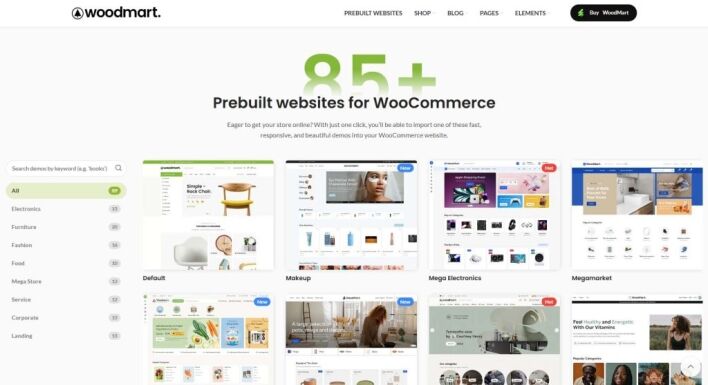
Because WooCommerce runs on WordPress, you have access to thousands of themes and an enormous plugin ecosystem, plus full code-level access if you want to build something completely custom. This makes it a strong choice for brands with specific design or functionality requirements that off-the-shelf platforms can’t meet.
Shopify design flexibility
Shopify offers a curated library of professional, conversion-optimised themes through its Theme Store, plus the Shopify App Store for added functionality. Customisation is achieved through Shopify’s Liquid templating language, which is less open than WordPress but generally more stable, since Shopify controls the core platform and reduces the risk of conflicting code.
SEO Capabilities: WooCommerce vs Shopify
Both platforms have significantly improved their SEO toolsets in recent years, but they approach it differently.
WooCommerce benefits from WordPress’s content engine. Plugins like Yoast SEO and Rank Math give merchants granular control over meta tags, schema markup, XML sitemaps, canonical URLs, and breadcrumbs, and the WordPress block editor makes it easier to build rich content around product categories, useful for building topical authority (Tech Insider, 2026).
Shopify has closed much of the SEO gap in 2025–2026, now supporting custom meta fields, auto-generated XML sitemaps, canonical tags, and structured data for products out of the box (Tech Insider, 2026). Shopify also tends to offer faster default load times, with an average page load around 1.8 seconds out of the box, while only about 51% of WooCommerce stores hit sub-second speeds after optimisation (Tech Insider, 2026). Site speed is a known ranking factor, so this is worth weighing if SEO is a priority and you don’t have dedicated technical resources.
If your strategy relies heavily on content marketing and blogging to drive organic traffic, WooCommerce’s deeper WordPress integration generally gives you more flexibility. If you want strong SEO fundamentals without manual optimisation, Shopify’s defaults are increasingly competitive.
If you’re not sure which approach fits your current website setup, our team at DCP Web Designers can review your SEO requirements and recommend the right platform for your goals.
Scalability and Performance
WooCommerce can scale to high traffic volumes, but it typically requires managed WordPress hosting (such as WP Engine), caching plugins, and server upgrades as you grow, technical optimisation work that can deliver 2–5x speed gains over shared hosting during traffic spikes (Presta, 2026).
Shopify scales more predictably because infrastructure, security, and traffic spikes (like Black Friday) are handled by Shopify itself, which is part of why it’s popular with merchants who outgrow basic hosting setups.
Apps, Plugins and Integrations
WooCommerce uses WordPress plugins, which install directly onto your server. This gives you deep control but carries a higher risk of plugin conflicts or site-breaking updates.
Shopify apps largely run via API rather than installing code directly onto your site, which reduces the risk of an app update breaking your store (Presta, 2026).
Security and Support

Shopify includes hosting-level security, SSL, and PCI compliance as part of your subscription, plus 24/7 platform support.
WooCommerce security depends on your hosting provider, your plugin choices, and how diligently you keep everything updated, you have more control, but more responsibility.
Support is typically community-based or through your developer/agency rather than a single dedicated provider.
WooCommerce vs Shopify: Side-by-Side Summary
Choose WooCommerce if:
- You already use WordPress or want a content-driven SEO strategy
- You want full control over design, code, and hosting
- You have access to a developer or technical resource
- You want to minimise ongoing platform fees
Choose Shopify if:
- You want to launch quickly with minimal technical setup
- You prefer predictable monthly costs and managed hosting
- You want built-in security, support, and reliability at scale
- You’re prioritising fast load times out of the box
Final Verdict: Which Platform Should You Choose?

There’s no single “best” platform, only the best fit for your business. WooCommerce suits merchants who want flexibility, content integration, and long-term cost control, while Shopify suits merchants who want a managed, fast-to-launch, all-in-one solution.
If you’re still unsure which platform matches your goals, budget, and technical resources, get in touch with DCP Web Designers for tailored advice on building or migrating your online shop.
Frequently Asked Questions
Is WooCommerce cheaper than Shopify?
Generally, yes WooCommerce is free to use, and you only pay for hosting and plugins. However, costs can rise if you need premium plugins, developer support, or managed hosting at scale.
Which platform is better for SEO, WooCommerce or Shopify?
WooCommerce traditionally offers more granular SEO control through WordPress plugins, but Shopify has significantly improved its built-in SEO features in 2025–2026, including structured data and auto-generated sitemaps.
Can I switch from WooCommerce to Shopify (or vice versa)?
Yes, migrations between the two platforms are possible, though they require careful planning around product data, URLs, and SEO redirects to avoid losing search rankings.
Which platform is better for beginners?
Shopify is generally easier for beginners since hosting, security, and setup are handled for you. WooCommerce has a steeper learning curve but offers more flexibility long-term.
Stat Sources
Tech Insider – “Shopify vs WooCommerce 2026: 38% vs 27% Market Share [Tested]” — https://tech-insider.org/shopify-vs-woocommerce-2026/
PureThemes – “WooCommerce Statistics 2026: Market Share” — https://purethemes.net/woocommerce-statistics/
Mobiloud – “WooCommerce vs Shopify: Market Share Insights for 2026” — https://www.mobiloud.com/blog/woocommerce-vs-shopify-market-share-statistics
ColorWhistle – “WooCommerce vs Shopify Statistics Compared for 2026” — https://colorwhistle.com/woocommerce-vs-shopify-statistics/
Presta – “WooCommerce vs Shopify Review 2026” — https://wearepresta.com/woocommerce-shopify-review-2026/
Digital Applied – “WooCommerce vs Shopify 2026: Platform Comparison” — https://www.digitalapplied.com/blog/woocommerce-vs-shopify-2026-platform-comparison
Need Help Choosing or Building Your Online Shop?
Whether you decide on WooCommerce, Shopify, or you’re still weighing up your options, getting expert advice early can save you time, money, and plenty of headaches down the line.
At DCP Web Designers, we specialise in building fast, secure, and search-optimised WooCommerce web design tailored to your business goals. From custom design and product setup to SEO, hosting, and ongoing support, our team handles the technical heavy lifting so you can focus on running your shop.
Get a free, no-obligation consultation and find out whether WooCommerce is the right platform for your online store.