

Your website is often the first impression potential customers have of your business. In today’s competitive online marketplace, simply having a website is no longer enough. A successful business website needs to look professional, provide an exceptional user experience, build trust and encourage visitors to take action.
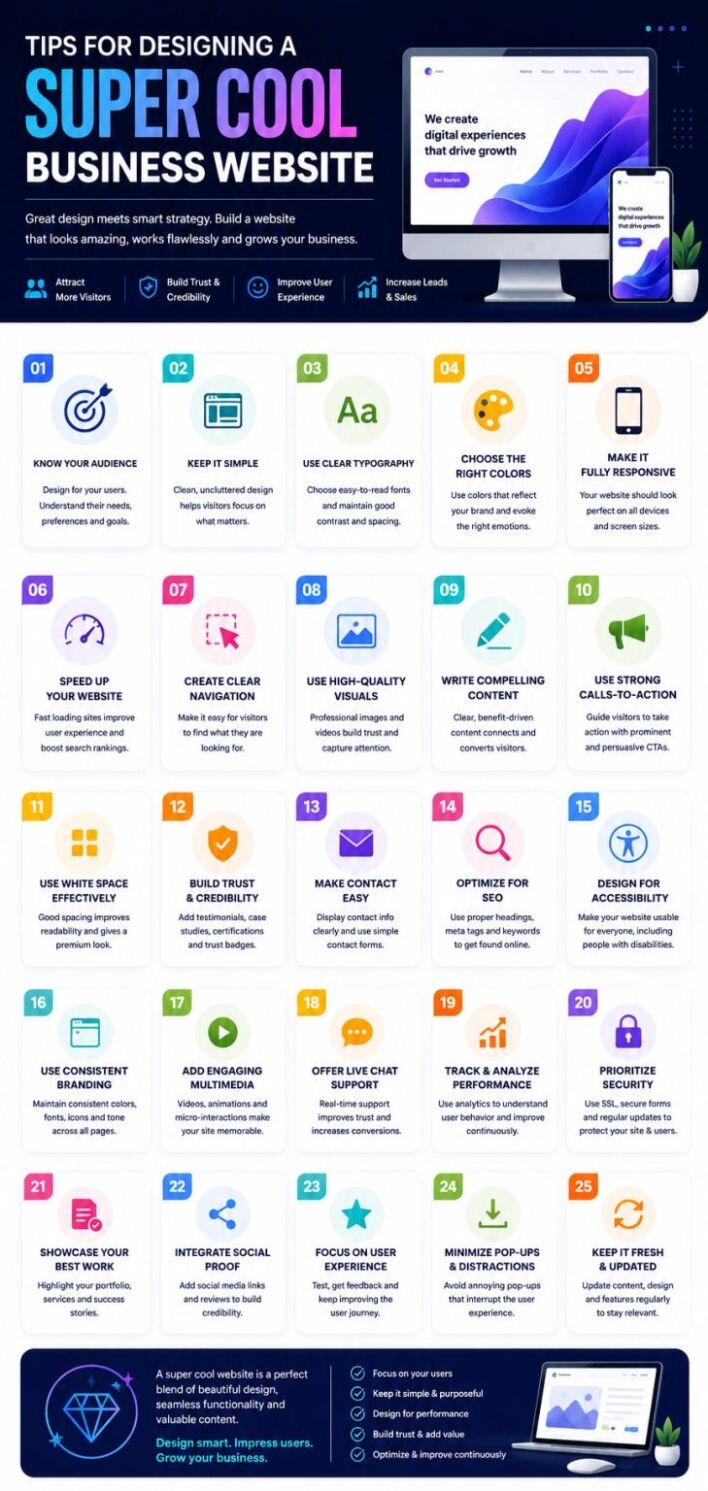
This infographic highlights 25 practical tips that can help businesses create a modern, engaging and high-performing website. Whether you are launching a brand-new website or improving an existing one, these design principles can help increase visitor engagement, improve search engine visibility and generate more enquiries.
Why Website Design Matters
A well-designed website does much more than look attractive. It plays a vital role in how users interact with your business online. Studies consistently show that visitors form an opinion about a website within seconds of arriving.
Good website design can help:
- Increase visitor engagement
- Improve trust and credibility
- Reduce bounce rates
- Generate more leads and enquiries
- Improve search engine rankings
- Increase sales and conversions
- Strengthen your brand identity
By focusing on both appearance and functionality, businesses can create websites that support long-term growth.
Understand Your Audience
Before designing any website, it is important to understand who your visitors are. Consider their goals, challenges and expectations.
When you know your audience, you can:
- Create relevant content
- Design intuitive user journeys
- Highlight the information visitors need most
- Improve overall user satisfaction
A website built around user needs will always perform better than one designed solely around aesthetics.
Keep the Design Clean and Simple
One of the most important principles of modern web design is simplicity. Cluttered layouts can overwhelm visitors and make it difficult for them to find information.
A clean design should include:
- Clear navigation menus
- Consistent spacing
- Easy-to-read content
- Logical page layouts
- Focused messaging
Simple websites often convert better because they make decision-making easier for visitors.
Focus on Mobile Users
More than half of all website traffic now comes from mobile devices. A responsive design ensures your website looks and functions perfectly on smartphones, tablets and desktops.
Mobile-friendly websites provide:
- Better user experiences
- Faster page loading
- Improved SEO performance
- Higher engagement rates
Designing with a mobile-first mindset has become essential for modern business websites.
Prioritise Website Speed
Website speed directly impacts user experience and search engine rankings. Slow websites frustrate visitors and often result in lost opportunities.
To improve website performance:
- Compress images
- Use modern image formats such as WebP
- Enable caching
- Minimise unnecessary scripts
- Choose quality website hosting
A faster website keeps visitors engaged and encourages them to explore more pages.
Use High-Quality Visual Content
Professional imagery and video content can significantly improve the appearance of a website. High-quality visuals help communicate professionalism and build confidence in your brand.
Consider including:
- Professional photography
- Product images
- Team photos
- Explainer videos
- Customer success stories
Visual content often helps communicate information faster than text alone.
Build Trust and Credibility
Trust is a major factor in whether visitors choose to contact your business or make a purchase.
Effective trust-building elements include:
- Customer testimonials
- Online reviews
- Case studies
- Industry accreditations
- Awards and certifications
- Secure website indicators
These features reassure visitors that they are dealing with a reputable business.
Create Strong Calls-to-Action
Every page should encourage visitors to take a specific action.
Examples include:
- Request a quote
- Book a consultation
- Contact us today
- Download a guide
- Start a free trial
Calls-to-action should be visible, clear and strategically placed throughout the website.
Optimise for Search Engines
A beautiful website is of little value if potential customers cannot find it.
SEO-friendly design includes:
- Proper heading structures
- Optimised page titles
- Fast loading pages
- Mobile responsiveness
- Internal linking
- Keyword-focused content
Combining strong design with SEO best practices can help increase organic traffic and improve online visibility.
Improve User Experience
User experience should be at the centre of every design decision. Visitors should be able to find information quickly and navigate the website effortlessly.
Focus on:
- Clear navigation
- Readable typography
- Accessible design
- Fast page speeds
- Logical page structure
A positive user experience often leads to higher conversion rates and greater customer satisfaction.
Monitor and Improve Performance
Launching a website is only the beginning. Successful websites are continuously monitored and improved.
Useful tools include:
- Google Analytics
- Google Search Console
- Heatmap software
- Conversion tracking tools
Regular analysis helps identify opportunities to improve performance and generate better results.
Final Thoughts
Designing a successful business website requires a balance of creativity, strategy and functionality. The 25 tips highlighted in this infographic provide a practical framework for creating a website that looks impressive and supports business growth.
From responsive design and fast loading speeds to strong calls-to-action and SEO, every element contributes to the overall effectiveness of your website. By implementing these best practices, businesses can create a professional online presence that attracts visitors, builds trust and generates more enquiries, leads and sales.
If you want a professionally designed business website built on WordPress, our team has been doing this for over 20 years. Take a look at our WordPress website design London service to see what we can do for your business.