

Animation consistently outperforms live-action on one specific dimension that matters enormously in marketing: the ability to show something that doesn’t yet physically exist.
A product in development, a concept before the MVP, a workflow that plays out entirely in digital space – animation renders all of these without a camera, a set, or a production crew.
This isn’t a niche capability. For large categories of marketing content, it’s a structural advantage.
The Marketing Formats Where Animation Wins
The distinction between when to use animation and when to use live-action isn’t primarily about aesthetics. It’s about what you’re trying to show and to whom.
Animation wins when the message is conceptual. Abstract product mechanics, multi-step workflows, system integrations, and process visualisations all render more clearly as animation than as live-action, because the visual language of animation can simplify without sacrificing accuracy. A real-world camera shows what something looks like. Animation shows how something works.
Animation also wins when you need the content to feel timeless. Live-action footage dates itself – clothing, hairstyles, office environments, even the texture of the video signal itself. Animation doesn’t carry those timestamps. Brand explainer content produced in animation today remains visually current five years later.
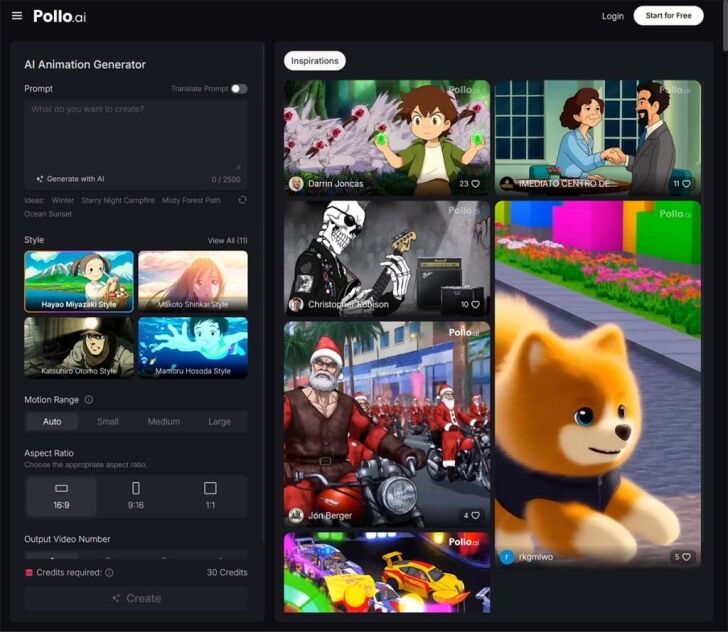
For teams who want to create cartoon videos from existing marketing scripts, Pollo AI’s AI animation generator provides a practical path from written concept to animated output – including the ability to reimagine existing video concepts in animated creative styles.
What Marketing Teams Get Wrong About Animation
The most common mistake is treating animation as a visual upgrade to an already finished script. It isn’t. Animation has its own structural requirements.
Scripts that work for animation are shorter. The visual medium carries more information per second than written text, and animation can show concepts that would take three sentences to explain. A 1,000-word explainer script often becomes a 60-second animation – which means the script needs to be completely restructured, not just shortened.
Each scene should have a single visual focus. Animation gets cluttered when scenes try to carry multiple competing messages simultaneously. One concept per scene is not a creative limitation – it’s how animation communicates effectively.
Abstract ideas need visual anchors. What does “faster deployment” look like? What does “reduced friction” look like? Before the script can work in animation, every abstract claim needs a concrete visual representation.
Turning a Marketing Script into an Animated Asset with Pollo AI
Pollo AI’s animation generator handles the translation from concept to visual output. Whether the starting point is a written script, an existing video concept, or a product briefing document, Pollo AI provides a structured path from input to animated output.
One capability worth highlighting: Pollo AI can take existing live-action or presenter-led video concepts and recreate them in animated styles. Teams that already have working video scripts don’t need to start from zero – the underlying structure and pacing can be preserved while the visual language is transformed.
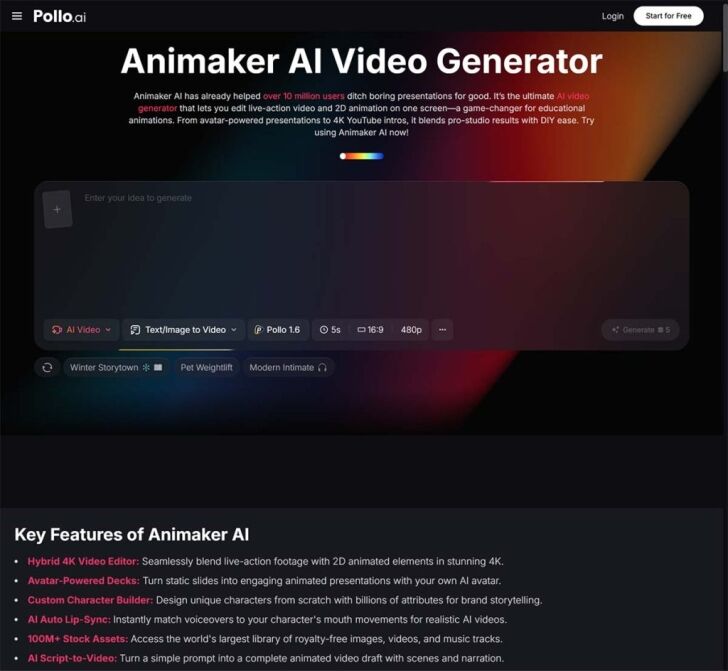
For teams researching what different animation platforms look like in terms of feature sets, workflow approaches, and visual style ranges, the Animaker page on Pollo AI provides useful internal context on how this tool category has developed.
A Script-to-Animation Workflow That Works
- Identify what the animation needs to show – before writing a word, list the visual moments the animation must contain. Work backward from the visuals to the script, not forward from the script to the visuals.
- Write for scenes, not for paragraphs – divide the script into distinct scene beats. Each beat gets one image, one concept, one emotional register. No scene should contain more than one idea.
- Eliminate what can be shown – any sentence that describes something the animation can visually demonstrate should be removed. Let the image carry the message wherever possible.
- Generate and evaluate pacing first – when reviewing animation output, evaluate pacing before style. A perfectly styled animation that moves too fast or too slow will lose viewers before they receive the message.
- Prioritise the opening and the close – the first five seconds determines whether the viewer stays. The final ten seconds determines what they remember. Focus revision effort on these two moments before addressing anything else.
Conclusion
Animation’s structural advantages – conceptual clarity, visual flexibility, timeless production style – make it one of the highest-leverage formats in marketing.
Pollo AI makes these advantages accessible without a motion design team or a production budget built for traditional animation. If your marketing script is describing a concept that benefits from being shown rather than said, animation is the right format.
Pollo AI is a practical way to get there.