

Artificial Intelligence (AI) is revolutionising industries across the globe, and scientific research is no exception. From accelerating drug discovery to modelling climate change, AI is enabling scientists to tackle complex problems faster, more accurately, and at a scale previously thought impossible.
This transformative technology is not just a tool for automation, it is becoming an essential part of the scientific method itself. In this article, we explore the many ways AI is being used in scientific research and how it is changing the landscape of discovery.
Accelerating Drug Discovery
One of the most impactful applications of AI in science is in drug discovery and development. Traditional drug discovery processes can take years and cost billions, involving lengthy stages of testing and validation. AI drastically reduces this timeline by predicting how different molecules will interact with biological targets.

Machine learning algorithms can analyse large datasets of chemical compounds and biological responses to identify promising drug candidates much faster than traditional methods. Companies like DeepMind, BenevolentAI, and Insilico Medicine are already using AI to design new molecules and optimise chemical structures.
In fact, during the COVID-19 pandemic, AI played a key role in the development of treatments and vaccines by helping researchers understand the virus’s protein structures and simulate their behaviours.
Analysing Complex Data Sets
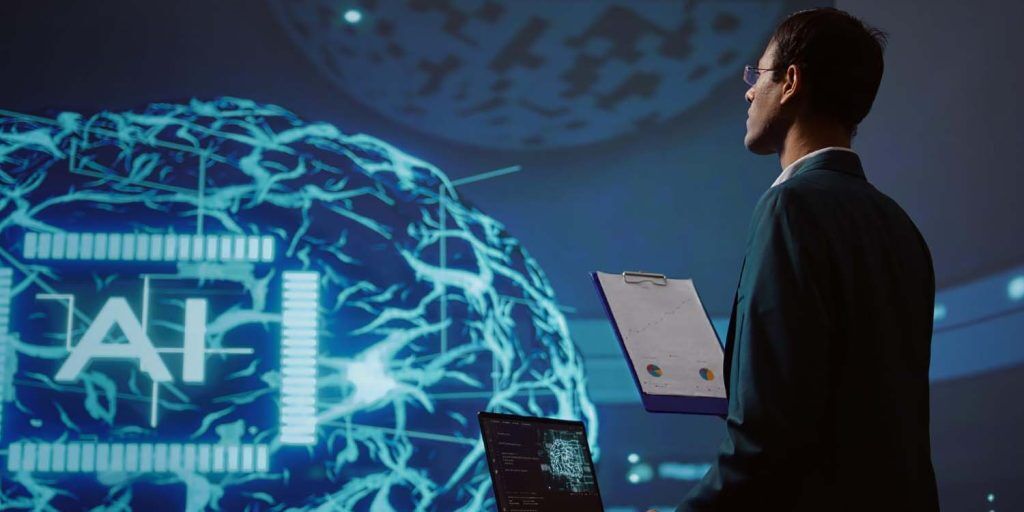
Modern scientific research generates massive volumes of data, from genomic sequences to astronomical images and climate models. Analysing this data manually is inefficient and often impractical. AI and machine learning offer powerful tools to extract patterns, make predictions, and identify anomalies.
In fields such as genomics, AI is used to identify genes linked to specific diseases, uncover variations in DNA sequences, and predict hereditary conditions. Tools like DeepVariant from Google use deep learning to improve the accuracy of DNA sequencing data, providing researchers with more reliable insights.
In astronomy, AI helps scientists sift through terabytes of data from telescopes to identify exoplanets, map galaxies, and detect gravitational waves. Pattern recognition algorithms can flag unusual celestial events that might otherwise go unnoticed.
Climate Science and Environmental Research
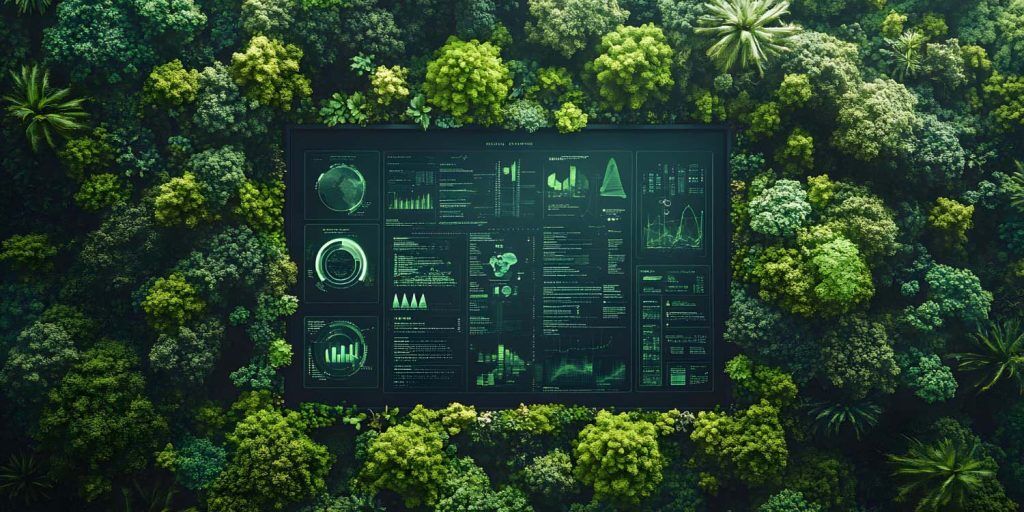
Understanding and predicting environmental changes is another major application of AI in scientific research. Climate models are incredibly complex, relying on a vast array of variables like ocean temperatures, carbon emissions, and atmospheric pressure.
AI is being used to build more accurate climate models by learning from historical data and forecasting future climate patterns with improved precision. Machine learning can also help identify early warning signs of natural disasters such as hurricanes, floods, and wildfires, potentially saving lives and property.
Remote sensing technologies, including satellite imagery, are being paired with AI to monitor deforestation, wildlife migration, and pollution levels. These AI-enhanced observations enable better decision-making in conservation efforts and environmental policy.
Robotics and Automation in Laboratories
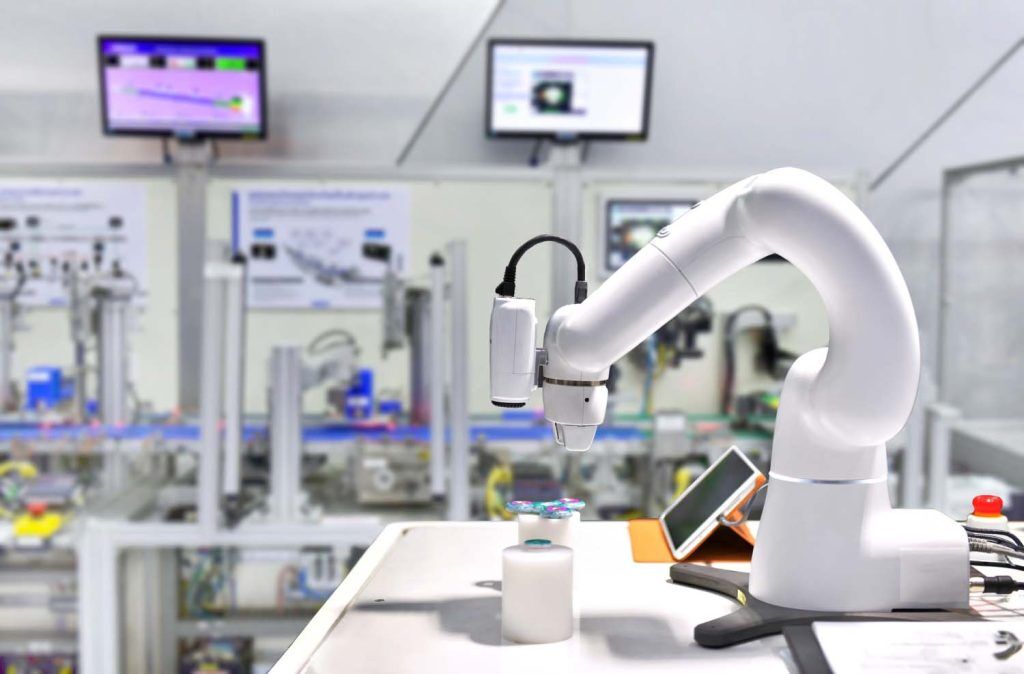
AI-powered robotics is streamlining laboratory processes by automating repetitive tasks, improving efficiency, and reducing human error. In high-throughput experiments, where thousands of tests are run simultaneously, AI-controlled robots can perform sample preparation, measurements, and data collection with high accuracy.
For example, the use of robotic platforms in materials science has accelerated the discovery of new materials by automating the synthesis and characterisation of compounds. Researchers can run multiple experiments in parallel, with AI analysing the results in real-time to guide the next steps.
Laboratory automation also reduces the risk of contamination and ensures consistency in procedures, allowing scientists to focus on more complex tasks such as hypothesis generation and data interpretation.
AI in Theoretical Research and Simulation
AI is not limited to data analysis and automation, it is also being used in theoretical science. Machine learning models can simulate complex physical and biological processes, providing new insights that were previously unreachable due to computational limitations.
In quantum physics, AI is being used to predict the behaviour of quantum systems, simulate interactions between particles, and even assist in developing quantum algorithms. These simulations help scientists better understand fundamental physical laws and test theories under different conditions.
Similarly, in systems biology, AI models are used to simulate entire biological systems, such as cell signalling pathways or metabolic networks. These simulations can predict how cells will respond to different stimuli, leading to breakthroughs in personalised medicine and biotechnology.
Enhancing Scientific Imaging and Diagnostics
AI is also transforming the field of scientific imaging by enhancing image resolution, reducing noise, and automating interpretation. In disciplines such as neuroscience and medical diagnostics, AI-driven image analysis can detect minute details in scans that may be missed by human observers.
For example, deep learning models have been trained to identify early-stage tumours in medical imaging or map the intricate connections between neurons in brain scans.
These tools not only improve diagnostic accuracy but also open new avenues for research into human cognition and neurological diseases.
In microscopy, AI enables real-time image enhancement, allowing researchers to observe live cellular processes with unprecedented clarity. This technology is advancing our understanding of cellular biology, disease progression, and drug interactions.
Scientific Literature Analysis

The sheer volume of scientific publications produced every year makes it difficult for researchers to keep up with the latest findings. AI tools are now being used to analyse and summarise scientific literature, identify trends, and uncover hidden relationships between studies.
Natural language processing (NLP) algorithms can scan millions of research papers, extract relevant information, and even generate new hypotheses based on the accumulated knowledge. This is particularly valuable in interdisciplinary fields, where findings from one area may inform progress in another.
Projects like Semantic Scholar and IBM Watson Discovery aim to bridge the gap between different scientific domains by providing AI-powered literature review tools.
Ethical Considerations and Challenges
While AI offers tremendous promise in scientific research, it also introduces challenges that must be addressed. One major concern is the interpretability of AI models, many deep learning systems function as “black boxes”, making it difficult for researchers to understand how conclusions are reached.
There are also ethical concerns around data privacy, particularly in fields like genomics and healthcare, where sensitive personal information is involved. Ensuring data security and compliance with regulations is essential when integrating AI into research workflows.
Bias in AI models is another critical issue. If an AI system is trained on biased or incomplete data, it can produce misleading or inaccurate results, which could have serious implications in high-stakes research areas.
To address these challenges, researchers are focusing on developing explainable AI, transparent algorithms, and ethical frameworks for the responsible use of AI in science.
Conclusion
AI is reshaping the landscape of scientific research, enabling breakthroughs that were previously unattainable. From accelerating drug development to enhancing climate models and decoding the human genome, AI is proving to be an indispensable partner in the pursuit of knowledge.
As AI technologies continue to advance, their role in scientific discovery will only grow. However, with this power comes responsibility. Researchers must ensure that AI is used ethically, transparently, and inclusively to maximise its benefits for science and society.
The future of scientific research is not just human, it is human and artificial intelligence working hand in hand.