

Website speed has become one of the most important factors for SEO and online success.
Google wants to provide users with fast, reliable and user-friendly websites. If a website loads slowly, users are more likely to leave before interacting with the content.
Fast website speed can help businesses:
- Improve Google rankings
- Increase website traffic
- Reduce bounce rates
- Improve conversion rates
- Create better user experiences
- Support AI search visibility
In 2026, website speed also affects how AI powered platforms such as ChatGPT, Claude, Google Gemini and Perplexity access and understand website content.
Businesses with fast websites are in a stronger position for both traditional SEO and AI generated search visibility.
Why Website Speed Matters for SEO
Google uses website speed as part of its ranking algorithm.
A slow website can negatively affect:
- Search rankings
- User experience
- Mobile usability
- Engagement levels
- Conversion rates
Users expect websites to load quickly. If a page takes too long, visitors often leave before viewing products, services or content.
Fast websites create smoother experiences and encourage users to stay longer.
What Is Website Loading Speed?
Website loading speed refers to how quickly a webpage loads and becomes usable for visitors.
This includes:
- Text loading
- Images appearing
- Menus functioning
- Buttons becoming clickable
- Content displaying properly
A website may appear visually loaded but still perform poorly if elements continue loading in the background.
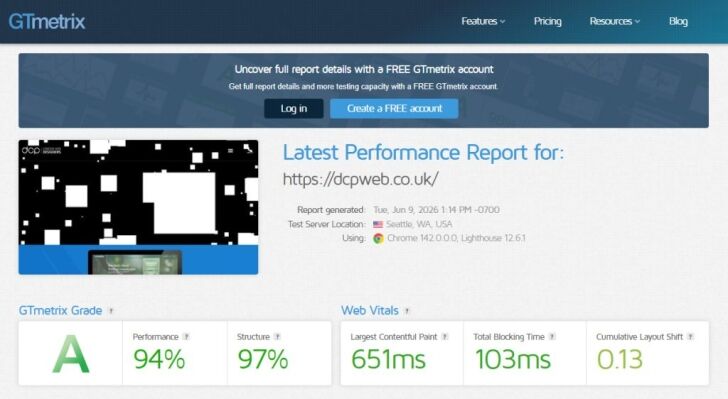
Google measures website performance using various technical metrics.
What Are Core Web Vitals?
Core Web Vitals are performance measurements used by Google to evaluate user experience.
The three main Core Web Vitals are:
Largest Contentful Paint (LCP)
Measures how quickly the main content of a page loads.
Fast loading content improves user satisfaction.
Interaction to Next Paint (INP)
Measures how quickly a website responds to user interactions such as clicks and taps.
Responsive websites create smoother experiences.
Cumulative Layout Shift (CLS)
Measures visual stability while a page loads.
Websites with shifting layouts create frustration for users.
Good Core Web Vitals scores can support stronger Google rankings.
Fast Websites Improve User Experience
User experience is closely connected to SEO performance.
Visitors are more likely to trust and engage with websites that load quickly.
Fast websites help users:
- Find information quickly
- Browse products easily
- Submit enquiries faster
- Complete purchases smoothly
Slow websites often create frustration and increase bounce rates.
A good user experience encourages visitors to spend more time on a website, which can improve engagement signals for SEO.
Website Speed Affects Bounce Rates
Bounce rate measures how many users leave a website without interacting further.
Slow loading websites often experience:
- Higher bounce rates
- Lower page views
- Reduced engagement
If users leave quickly, search engines may view the website as less useful.
Fast websites encourage users to continue browsing and exploring additional pages.
Mobile Website Speed Is Extremely Important
Most website traffic now comes from mobile devices.
Google uses mobile first indexing, meaning the mobile version of your website is prioritised for rankings.
Mobile users expect fast performance even on slower internet connections.
A fast mobile website helps improve:
- User experience
- SEO rankings
- Conversion rates
- Ecommerce sales
Businesses should regularly test website speed on smartphones and tablets.
Fast Websites Improve Ecommerce Performance
Website speed directly affects ecommerce sales and online revenue.
Slow ecommerce websites can cause:
- Cart abandonment
- Reduced conversions
- Lower customer trust
- Lost sales
Fast WooCommerce websites help customers:
- Browse products faster
- Search products smoothly
- Complete checkout quickly
Even small speed improvements can increase ecommerce conversion rates significantly.
Website Speed Supports AI Search Visibility
AI powered search systems increasingly rely on high quality website experiences.
Platforms such as ChatGPT, Claude, Google Gemini and Perplexity prefer content that is:
- Well structured
- Fast loading
- Mobile responsive
- Easy to access
Fast websites make it easier for AI systems to process and understand content efficiently.
Businesses optimising for AI search should prioritise website speed alongside traditional SEO.
Common Causes of Slow Website Speed
Many websites become slow because of technical problems and poor optimisation.
Common causes include:
- Poor quality hosting
- Large image files
- Too many plugins
- Heavy themes
- Unoptimised code
- Excessive scripts
- Lack of caching
- Slow server response times
Identifying and fixing these issues can improve website performance significantly.
How to Improve Website Speed
There are many ways businesses can improve website performance.
Use Fast Web Hosting
Reliable hosting providers improve:
- Server response times
- Website uptime
- Overall speed performance
Managed WordPress hosting often provides better performance than low cost shared hosting.
Optimise Images
Large image files slow websites down.
Businesses should:
- Compress images
- Use WebP format
- Resize oversized images
- Remove unnecessary media
Optimised images help pages load much faster.
Use Website Caching
Caching stores temporary website files to improve loading speed.
Popular caching plugins include:
Caching reduces loading times for repeat visitors.
Use a CDN
A Content Delivery Network helps deliver website content from servers closer to users.
Popular CDN services include:
CDNs improve loading speed globally.
Reduce Unnecessary Plugins
Too many plugins can slow websites down.
Remove plugins that are:
- Unused
- Poorly coded
- Outdated
A cleaner WordPress setup often performs better.
Fast Themes Help Improve Speed
Your WordPress theme affects website speed significantly.
Lightweight themes usually perform much better than bloated themes with excessive features.
Popular fast themes include:
- Astra
- GeneratePress
- Hello Elementor
- Kadence
Choosing the right theme creates a stronger SEO foundation.
Website Speed and Conversion Rates
Fast websites help improve conversions because users can complete actions more easily.
This includes:
- Contact form submissions
- Product purchases
- Appointment bookings
- Newsletter sign ups
Even a one second delay can reduce conversions and affect business revenue.
Businesses investing in website speed often achieve better long term results.
Tools to Test Website Speed
Businesses can test website performance using tools such as:
- Google PageSpeed Insights
- GTmetrix
- Pingdom Tools
- Lighthouse
These tools help identify technical performance issues and optimisation opportunities.
Regular testing helps maintain strong website performance.
Website Speed and Local SEO
Local businesses also benefit from fast websites.
Fast local websites can help improve visibility for searches such as:
Local customers often search using mobile devices, making speed even more important.
Why Website Speed Matters More in 2026
Modern users expect websites to load instantly.
Search engines and AI platforms continue prioritising websites that deliver:
- Fast performance
- Good usability
- Strong mobile experiences
- Clear content structure
Businesses with slow websites risk losing traffic, leads and sales to competitors with better performing websites.
Benefits of a Fast Website
A fast website can help businesses:
- Improve Google rankings
- Increase organic traffic
- Reduce bounce rates
- Increase enquiries
- Improve ecommerce sales
- Support AI search visibility
- Improve user experience
- Strengthen customer trust
Website speed is no longer optional for businesses that want strong online visibility.
Need Help Speeding Up Your Website?
At DCP Web Designers, we help businesses improve website speed through:
- WordPress optimisation
- WooCommerce optimisation
- Website caching
- Image compression
- Cloudflare setup
- NitroPack optimisation
- Technical SEO improvements
We create fast loading websites structured for Google SEO and AI-powered search platforms.
Contact our team today for a free consultation and professional website speed optimisation support.
DCP Web Designers is a team of experienced London web designers with over 20 years of experience and 300+ five-star Google reviews.