

Running a successful ecommerce website involves more than simply listing products online. While attracting website visitors is important, converting those visitors into paying customers is what drives revenue and business growth.
Many online stores lose potential sales because of slow-loading pages, complicated checkout processes, poor product information or a lack of trust signals. Fortunately, small improvements can have a significant impact on conversion rates and customer satisfaction.
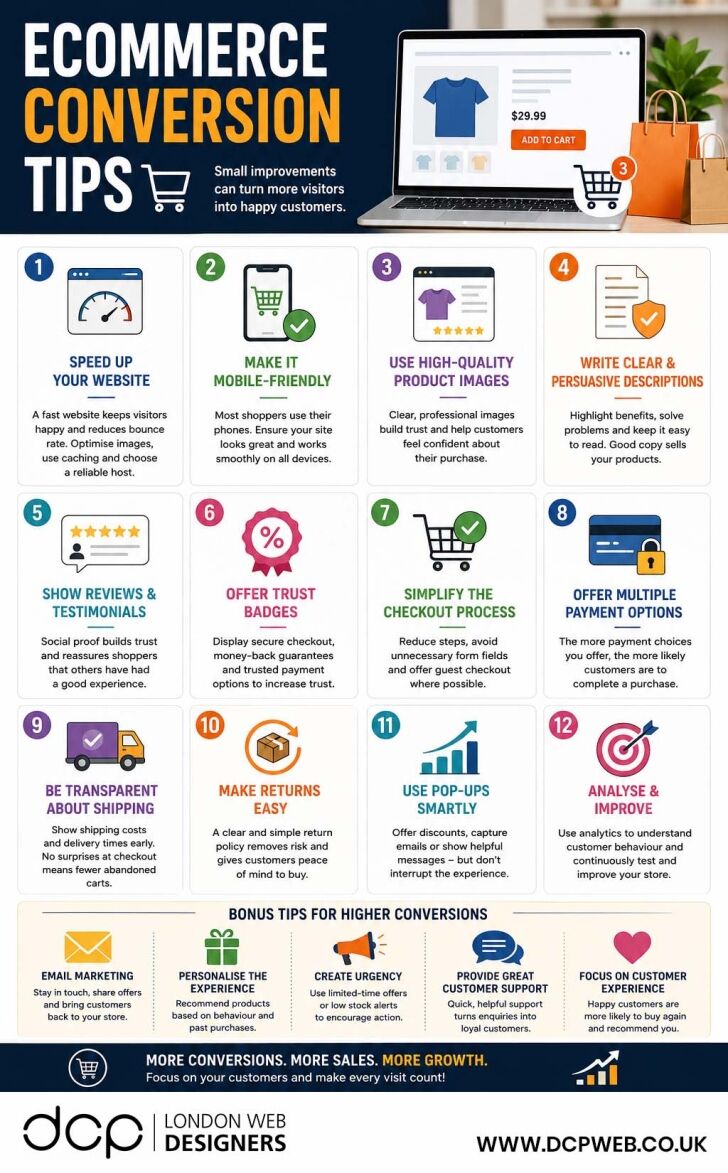
This guide explores 12 practical ecommerce conversion tips that can help improve your online store performance, increase customer confidence and boost sales.
Whether you operate a WooCommerce store, Shopify website or custom ecommerce platform, these strategies can help maximise results.
What Is Ecommerce Conversion Optimisation?
Ecommerce conversion optimisation is the process of improving your website to encourage more visitors to complete desired actions such as:
- Purchasing a product
- Adding products to a basket
- Signing up for newsletters
- Requesting information
- Creating customer accounts
The goal is to increase the percentage of visitors who become customers without necessarily increasing advertising spend or website traffic.
Why Ecommerce Conversion Rates Matter
Increasing conversion rates offers several benefits:
- Higher revenue from existing traffic
- Better return on advertising investment
- Lower customer acquisition costs
- Improved customer experience
- Increased customer loyalty
- Better long-term business growth
Even small improvements in conversion rates can generate substantial increases in revenue over time.
1. Speed Up Your Website
Website speed plays a major role in ecommerce success. Modern shoppers expect pages to load almost instantly, especially when browsing on mobile devices.
Slow-loading websites often experience:
- Higher bounce rates
- Lower engagement
- Reduced sales
- Poor search engine rankings
Ways to Improve Website Speed
- Optimise image sizes
- Use WebP image formats
- Implement browser caching
- Use a Content Delivery Network (CDN)
- Choose high-performance hosting
- Minimise unnecessary plugins and scripts
Fast websites provide a smoother shopping experience and encourage customers to continue browsing.
2. Make Your Store Mobile-Friendly
Mobile commerce continues to grow each year. Many online shoppers browse, compare products and complete purchases directly from smartphones and tablets.
A mobile-friendly website should provide:
- Responsive layouts
- Easy navigation
- Fast loading speeds
- Large clickable buttons
- Simplified checkout forms
3. Use High-Quality Product Images
Customers cannot physically inspect products online, making product photography extremely important.
Professional product images help customers:
- Understand product features
- Visualise ownership
- Compare options
- Build confidence before purchasing
Best Practices for Product Photography
- Use high-resolution images
- Include multiple angles
- Show products in use
- Allow zoom functionality
- Maintain consistent image styles
Strong visuals often influence purchasing decisions more than product descriptions.
4. Write Clear and Persuasive Product Descriptions
Product descriptions should do more than simply list specifications.
Effective descriptions explain:
- Key features
- Customer benefits
- Common use cases
- Problem-solving capabilities
- Unique selling points
What Makes a Good Product Description?
- Easy-to-read formatting
- Bullet point summaries
- Customer-focused language
- Clear calls to action
- Search engine optimisation
5. Display Customer Reviews and Testimonials
Social proof is one of the most powerful conversion tools available.
Positive reviews demonstrate that other customers have successfully purchased and enjoyed your products.
Benefits include:
- Increased trust
- Reduced purchase hesitation
- Improved credibility
- Higher conversion rates
Displaying verified reviews directly on product pages can significantly improve sales performance.
6. Use Trust Badges and Security Signals
Online shoppers need reassurance that their information is secure.
Trust indicators help remove doubts and improve confidence during checkout.
Common Trust Signals
- SSL certificates
- Secure payment icons
- Money-back guarantees
- Customer review ratings
- Industry accreditations
- Secure checkout badges
Trust-building elements are particularly important for new ecommerce brands.
7. Simplify the Checkout Process
Complicated checkout experiences are one of the biggest causes of abandoned baskets.
Customers should be able to complete purchases quickly and easily.
Checkout Optimisation Tips
- Reduce form fields
- Enable guest checkout
- Offer address autofill
- Display progress indicators
- Minimise distractions
The fewer barriers customers encounter, the more likely they are to complete their purchase.
8. Offer Multiple Payment Options
Different customers have different payment preferences.
Providing multiple payment methods increases convenience and reduces abandoned purchases.
Popular Ecommerce Payment Options
- Credit cards
- Debit cards
- PayPal
- Apple Pay
- Google Pay
- Klarna
- Clearpay
- Bank transfer options
Flexible payment choices help accommodate a wider range of shoppers.
9. Be Transparent About Shipping Costs
Unexpected shipping costs remain one of the most common reasons for cart abandonment.
Customers prefer transparency throughout the buying process.
Shipping Information to Display Clearly
- Delivery costs
- Estimated delivery times
- Free shipping thresholds
- International shipping options
- Tracking availability
Clear shipping information reduces surprises and improves trust.
10. Make Returns Easy
A straightforward returns policy helps customers feel more comfortable making purchases.
When shoppers know they can easily return products if necessary, they are often more willing to buy.
Return Policy Best Practices
- Clearly explain return procedures
- Outline timeframes
- Highlight refund options
- Simplify return requests
- Make policy information easy to find
Easy returns reduce perceived risk and support customer satisfaction.
11. Use Pop-Ups Strategically
Pop-ups can be highly effective when used correctly.
Rather than interrupting visitors, they should provide genuine value.
Examples include:
- First-order discounts
- Newsletter sign-ups
- Abandoned cart reminders
- Limited-time promotions
- Product recommendations
Carefully timed pop-ups can increase conversions without negatively affecting user experience.
12. Analyse and Continuously Improve
Successful ecommerce businesses constantly test and refine their websites.
Customer behaviour evolves, making ongoing optimisation essential.
Metrics to Monitor
- Conversion rates
- Cart abandonment rates
- Average order value
- Bounce rates
- Customer lifetime value
- Revenue per visitor
Tools such as Google Analytics, heatmaps and user session recordings can provide valuable insights into customer behaviour.
Bonus Ecommerce Conversion Tips
Beyond the core strategies above, consider implementing additional techniques to increase sales further.
Email Marketing
Email marketing remains one of the highest-performing ecommerce channels.
Use email campaigns to:
- Promote offers
- Recover abandoned carts
- Launch new products
- Encourage repeat purchases
Personalise the Shopping Experience
Personalisation helps customers discover products that match their interests.
Examples include:
- Recommended products
- Recently viewed items
- Personalised offers
- Dynamic content
Create Urgency
Urgency can encourage customers to act sooner.
Examples include:
- Limited-time promotions
- Low stock notifications
- Seasonal offers
- Flash sales
Deliver Excellent Customer Support
Responsive customer service helps answer questions and remove purchase barriers.
Support options may include:
- Live chat
- Email support
- Telephone support
- Knowledge bases
- Frequently asked questions
Focus on Customer Experience
The best ecommerce websites prioritise customer satisfaction throughout every stage of the journey.
Satisfied customers are more likely to:
- Return for future purchases
- Leave positive reviews
- Recommend your business
- Become long-term brand advocates
Common Ecommerce Conversion Mistakes to Avoid
Many online stores struggle with conversions because of avoidable issues such as:
- Slow website performance
- Poor mobile usability
- Weak product descriptions
- Limited payment options
- Hidden costs
- Complicated navigation
- Difficult checkout processes
- Lack of trust signals
Identifying and resolving these issues can often lead to immediate improvements.
Ecommerce Conversion Tips Summary
Increasing ecommerce conversions does not always require major website redesigns. Often, a series of small improvements can significantly impact sales and customer satisfaction.
By focusing on website speed, mobile usability, product content, trust signals, streamlined checkout experiences and ongoing optimisation, online retailers can create a shopping experience that encourages more visitors to become customers.
The most successful ecommerce businesses continually test, analyse and refine their stores to meet changing customer expectations and maximise long-term growth.
DCP is a London-based web design company with over 20 years of experience and a team of skilled web designers behind 300+ five-star Google reviews.